
















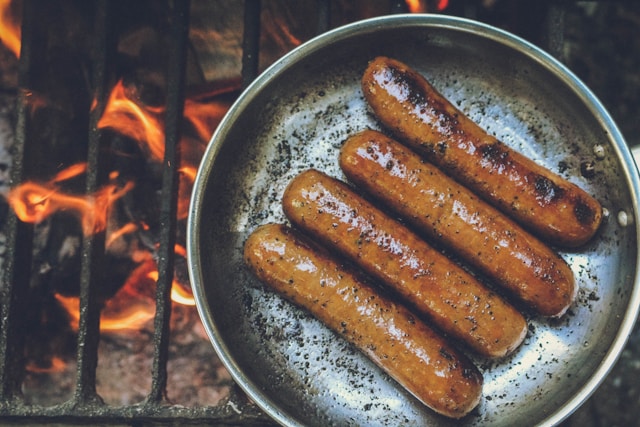
If there is one food Germany takes personally, it is the sausage.
Bratwurst, Currywurst, Weißwurst, Nürnberger Rostbratwurst, Thüringer Rostbratwurst, Bockwurst, Krakauer — Germany has so many varieties of sausage that vegetarians might occasionally wonder whether they accidentally booked a holiday in a very delicious meat museum.
But German sausages are more than quick street food. They are woven into regional history, beer-hall culture, family recipes and centuries-old food traditions. From medieval sausage kitchens in Nuremberg and Regensburg to legendary Berlin Currywurst stands, these are some of the best places to eat sausages in Germany.
So loosen your belt, sharpen your mustard instincts and prepare for a seriously wursty road trip.
1. Historische Wurstkuchl — Regensburg
History: The story here goes back to the 12th century. A building erected around 1135 originally served workers constructing Regensburg’s Stone Bridge. After the bridge was completed in 1146, it became a cookshop. The present family took over in 1806 and made grilled sausages the star attraction.
Year founded: 1146 as a restaurant; sausage tradition from 1806
Address: Thundorferstraße 3, 93047 Regensburg
Type of sausage: Regensburger-style grilled sausages
Meats used: Primarily pork
Most iconic dish: Sausages with sauerkraut
Cost for a meal: Approximately €10–€20
Seasoning: Salt, pepper and traditional sausage spices
Instagram: @wurstkuchl
Website: Historische Wurstkuchl
Eating at Wurstkuchl feels less like lunch and more like accidentally joining a medieval guild meeting where everyone has agreed that sausages are the agenda. The tiny riverside restaurant grills its sausages over an open charcoal fire and serves them with sauerkraut and mustard. Its location beside the Danube and Stone Bridge adds serious historical atmosphere. If your travel itinerary contains the words “ancient,” “sausages” and “beer,” congratulations — Regensburg has basically written your holiday for you.
2. Bratwursthäusle bei St. Sebald — Nuremberg
History: The restaurant traces its sausage-grilling tradition to the early 14th century. Its own history states that Nürnberger Rostbratwürste have been grilled here since 1312, traditionally over beechwood.
Year founded: 1312
Address: Rathausplatz 1, 90403 Nürnberg
Type of sausage: Nürnberger Rostbratwurst
Meats used: Pork
Most iconic dish: Nürnberger sausages with sauerkraut and potato salad
Cost for a meal: Approximately €10–€20
Seasoning: Marjoram, salt, pepper and traditional spice blend
Instagram: @bratwursthaeusle
Website: Bratwursthäusle Nürnberg
Tiny sausages, enormous history. That is basically the Bratwursthäusle philosophy. The restaurant produces its own Nürnberger Rostbratwürste and grills them over beechwood, giving the little pork sausages a smoky, aromatic personality. Sitting near St. Sebald Church, you get medieval Nuremberg architecture with your lunch — because apparently regular dining rooms weren’t dramatic enough. Order a plate of sausages, add sauerkraut, grab a beer and embrace the ancient art of eating approximately twelve sausages at once.
3. Zum Gulden Stern — Nuremberg
History: Zum Gulden Stern describes itself as the oldest bratwurst restaurant in Nuremberg still operating at its original location, with a history dating to 1419.
Year founded: 1419
Address: Zirkelschmiedsgasse 26, 90402 Nürnberg
Type of sausage: Original Nürnberger Rostbratwurst
Meats used: Pork
Most iconic dish: Nürnberger Rostbratwürste grilled over beechwood
Cost for a meal: From approximately €9.50 for the main sausage dish
Seasoning: Marjoram, salt, pepper and traditional Franconian spices
Instagram: @zumguldenstern
Website: Zum Gulden Stern information
If sausages had a Hall of Fame, Zum Gulden Stern would probably have its own wing. This historic Nuremberg institution specialises in the city’s famous little Rostbratwürste, cooked fresh over a traditional beechwood fire. The result is smoky, crisp-edged and dangerously easy to eat in multiples. There is no need to overthink your order here. Sausages, sauerkraut, bread and perhaps a beer. Sometimes culinary sophistication is simply knowing when to stop ordering things that aren’t sausages.
4. Bratwurst Röslein — Nuremberg
History: The restaurant traces its roots to medieval Nuremberg. The “Zu den drei Rosen” sausage kitchen is mentioned around 1480, while the Bratwurst Röslein name became official in the early 20th century.
Year founded: Traditionally traced to 1493
Address: Rathausplatz 6, 90403 Nürnberg
Type of sausage: Nürnberger Rostbratwurst
Meats used: Pork
Most iconic dish: Large platter of Nürnberger sausages
Cost for a meal: Approximately €20–€30
Seasoning: Marjoram, salt, pepper and traditional spices
Instagram: @bratwurst_roeslein
Website: Bratwurst Röslein
Bratwurst Röslein is the kind of place where your lunch comes with more historical credentials than some European buildings. Located beside Nuremberg’s Rathaus, the restaurant has centuries of sausage-related heritage behind it. Its Nürnberger Rostbratwürste are small, aromatic and designed to disappear from your plate at alarming speed. The restaurant has survived wars, rebuilding and generations of changing culinary fashion. Your biggest challenge today is considerably less dramatic: deciding whether six, eight, ten or twelve sausages constitute “a reasonable lunch.”
5. Nürnberger Bratwurst Glöckl am Dom — Munich
History: The building dates to 1390, while the Bratwurst Glöckl restaurant tradition began in the 1890s. Simon Bäumler renamed the establishment Nürnberger Bratwurst Glöckl in 1893.
Year founded: 1893 as Bratwurst Glöckl
Address: Frauenplatz 9, 80331 München
Type of sausage: Nürnberger Rostbratwürstl
Meats used: Pork
Most iconic dish: Nürnberger Bratwurst with sauerkraut
Cost for a meal: Approximately €15–€25
Seasoning: Marjoram, salt, pepper and traditional spices
Instagram: @bratwurstgloeckl
Website: Bratwurst Glöckl am Dom
Munich gets plenty of attention for beer, pretzels and Weißwurst, but the Bratwurst Glöckl makes a compelling argument for Nürnberger sausages too. Its famous little Rostbratwürstl are made according to a house recipe and grilled over open beechwood. The historic building sits beside Munich’s Frauenkirche, making it an excellent stop after sightseeing. Expect Bavarian hospitality, rustic surroundings and sausages that arrive looking suspiciously small — right before you realise you’ve ordered another plate.
6. Bratwurstherzl — Munich
History: The building was first documented as a restaurant in 1633. It has been known as Bratwurstherzl since 1901, giving it more than a century of sausage-specific identity.
Year founded: 1633 as a restaurant; 1901 as Bratwurstherzl
Address: Dreifaltigkeitsplatz 1, 80331 München
Type of sausage: Bavarian and Franconian bratwurst
Meats used: Primarily pork
Most iconic dish: Bratwurst with sauerkraut
Cost for a meal: Approximately €15–€25
Seasoning: Marjoram, pepper, salt and regional spices
Instagram: @bratwurstherzl
Website: Bratwurstherzl
Bratwurstherzl literally has “bratwurst” in its identity, so subtlety clearly wasn’t part of the business plan. This atmospheric Munich restaurant has been feeding visitors for centuries and focuses on Bavarian-Franconian comfort food. Expect sausages, hearty sides, beer and enough rustic charm to make you briefly consider moving into a wooden dining room. It is particularly good for travellers who want traditional Munich food without turning lunch into a three-hour opera about pretzels.
7. Konnopke’s Imbiß — Berlin
History: Max and Charlotte Konnopke began selling sausages in Berlin in 1930. In 1960, the family introduced its famous skinless Currywurst in East Berlin, complete with a secret family sauce recipe.
Year founded: 1930
Address: Schönhauser Allee 44B, 10435 Berlin
Type of sausage: Berlin Currywurst
Meats used: Traditionally pork
Most iconic dish: Skinless Currywurst with house sauce
Cost for a meal: Approximately €5–€10
Seasoning: Curry powder, paprika and secret house spices
Instagram: @konnopkes
Website: Konnopke’s Imbiß
Konnopke’s is not merely an address; it is Berlin sausage folklore with a roof over it. Founded in 1930, the family business became famous for introducing Currywurst to East Berlin in 1960. The signature sausage is skinless and covered in the family’s closely guarded sauce. The story is almost as addictive as the food. Order your Currywurst, add fries, stand under the railway viaduct and contemplate how one humble sausage became an entire city’s edible personality.
8. Curry 36 — Berlin
History: The famous Mehringdamm stand was taken over by Vera and Lutz Stenschke in 1981. The name comes from the address, Mehringdamm 36.
Year founded: 1981
Address: Mehringdamm 36, 10961 Berlin
Type of sausage: Berliner Currywurst
Meats used: Pork; chicken and meat-free versions are also available
Most iconic dish: Currywurst with Curry 36 sauce and fries
Cost for a meal: Approximately €5–€10
Seasoning: Curry powder and house curry blend
Instagram: @curry36
Website: Curry 36
Curry 36 is the loud, energetic cousin of Berlin’s sausage family. Open late and beloved by locals, taxi drivers, tourists and people who suddenly become extremely hungry at midnight, it specialises in classic Currywurst. The choice between sausage with or without casing is treated with almost religious seriousness. Pair yours with fries and the signature ketchup. The sauce is tomato-rich and curry-forward, while the atmosphere says: eat quickly, because another hungry Berliner is already eyeing your plate.
9. Witty’s Organic Currywurst — Berlin
History: Witty’s was established at Wittenbergplatz in 1984 and switched completely to organic ingredients in 2003, becoming Germany’s first organic snack bar according to the business.
Year founded: 1984
Address: Wittenbergplatz, Berlin
Type of sausage: Organic Currywurst and Bratwurst
Meats used: Organic pork; vegetarian/vegan alternatives also available
Most iconic dish: Organic Currywurst with organic fries
Cost for a meal: Approximately €8–€12
Seasoning: Curry powder, paprika and organic spice blend
Instagram: @wittysberlin
Website: Witty’s Organic Currywurst
Witty’s proves that Currywurst can wear sensible shoes and still be fun at parties. Established in 1984, the Berlin institution has served organic food since 2003 and became Germany’s first organic snack bar. Its Currywurst combines the classic Berlin format with a more sustainability-minded approach. Organic sausage, fries and curry sauce might sound wholesome, but don’t worry — it is still gloriously messy. Eat it standing up and nobody will question your commitment to authenticity.
10. Krasselt’s — Berlin
History: Krasselt’s has been a Steglitz institution since 1959, beginning as a freestanding sales trailer before developing into one of Berlin’s best-known traditional Currywurst addresses.
Year founded: 1959
Address: Steglitzer Damm 22, 12169 Berlin
Type of sausage: Berlin Currywurst
Meats used: Pork
Most iconic dish: Krasselt’s Currywurst with house sauce
Cost for a meal: Approximately €5–€10
Seasoning: Proprietary curry and spice blend
Instagram: @krasselts
Website: Krasselt’s information
Krasselt’s is proof that you don’t need neon signs and tourist crowds to make excellent Currywurst. The Steglitz institution has been serving its own sausage and house-made sauce since 1959. Its recipe is closely associated with the original location on Steglitzer Damm. The flavour profile is classic Berlin: smoky sausage, tangy tomato sauce and curry spice. Come hungry, leave happy and try not to start a heated debate about whether Krasselt’s beats Konnopke’s.
11. Curry Baude — Berlin
History: Curry Baude is a long-standing Gesundbrunnen favourite known for traditional Berlin Currywurst and a more neighbourhood-focused atmosphere than some of the city’s internationally famous stands.
Year founded: 1980s
Address: Gesundbrunnen, Berlin
Type of sausage: Currywurst
Meats used: Pork
Most iconic dish: Currywurst with fries
Cost for a meal: Approximately €5–€10
Seasoning: Curry powder, paprika, pepper and house spices
Instagram: @currybaude
Website: Curry Baude information
Curry Baude is for travellers who prefer their sausage adventures slightly less polished and much more local. Located in Gesundbrunnen, this Berlin favourite serves classic Currywurst in the straightforward style that made the dish famous in the first place. The sausage comes generously coated in spicy tomato sauce and curry seasoning, with fries providing the necessary carbohydrate support system. It is affordable, casual and wonderfully uncomplicated — basically Berlin’s answer to “Don’t overthink lunch.”
12. Wurst Willi — Dortmund
History: Wurst Willi has become a Dortmund institution at Petrikirchhof, serving the city’s hungry locals with classic German sausage dishes.
Year founded: Modern Dortmund sausage institution
Address: Petrikirchhof, 44137 Dortmund
Type of sausage: Bratwurst, Currywurst and other grilled sausages
Meats used: Primarily pork
Most iconic dish: Currywurst with fries
Cost for a meal: Approximately €5–€10
Seasoning: Curry, paprika, pepper and house seasoning
Instagram: @wurstwilli
Website: Wurst Willi
Wurst Willi keeps things gloriously simple: good sausage, hot grill and hungry customers. Located in central Dortmund, this popular snack spot is ideal when you want a traditional German sausage without needing to dress up for dinner. Currywurst and fries are the obvious move, but the wider sausage selection means indecisive eaters can conduct a small personal tasting festival. Dortmund is famous for football; Wurst Willi is doing its part to ensure visitors also remember the wurst.
13. Wurstmeister — Düsseldorf
History: Wurstmeister has developed a reputation in Düsseldorf for late-night sausage eating, making it particularly popular with people who discover that Düsseldorf nightlife creates a mysterious medical condition known as “sudden sausage hunger.”
Year founded: Modern Düsseldorf institution
Address: Hunsrückenstraße 25, 40213 Düsseldorf
Type of sausage: Currywurst and grilled sausages
Meats used: Pork and other meat varieties depending on dish
Most iconic dish: Currywurst with fries
Cost for a meal: Approximately €5–€10
Seasoning: Curry powder, paprika, pepper and spicy sauce
Instagram: @wurstmeister_duesseldorf
Website: Wurstmeister information
Düsseldorf has plenty of elegant restaurants, but sometimes the soul simply demands sausage. Wurstmeister answers that call with Currywurst and other fast, hearty dishes in the middle of the city’s nightlife district. The location makes it especially attractive after a few Altbiers, when your decision-making skills have deteriorated but your appetite has become extremely confident. Expect inexpensive food, generous portions and the sort of casual atmosphere where ketchup stains are considered acceptable evening accessories.
14. Edelcurry — Hamburg
History: Edelcurry became known in Hamburg for elevating the humble Currywurst with carefully selected ingredients while keeping the fast-food spirit intact.
Year founded: 2000s
Address: Große Bleichen 68, 20354 Hamburg
Type of sausage: Currywurst
Meats used: Pork; alternative options may vary
Most iconic dish: Currywurst with fries
Cost for a meal: Approximately €10–€15
Seasoning: Curry, paprika, chilli and house spice mix
Instagram: @edelcurry
Website: Edelcurry
Hamburg may be better known for the Reeperbahn and harbour than for sausage, but Edelcurry makes a strong culinary counterargument. The restaurant takes Currywurst seriously, pairing quality sausage with richly seasoned sauce and crisp fries. Its central location makes it an easy stop during a day of shopping or sightseeing. The name means something like “noble curry,” which is a bold claim for a dish eaten with a tiny wooden fork — but Edelcurry largely gets away with it.
15. Hanswurst — Aachen
History: Hanswurst is a modern German restaurant built around one very old national obsession: sausages. Its location beside Aachen’s historic Münsterplatz gives the concept a suitably traditional backdrop.
Year founded: Modern restaurant
Address: Münsterplatz 6, 52062 Aachen
Type of sausage: German regional sausages
Meats used: Pork, beef and other varieties depending on selection
Most iconic dish: Mixed German sausage platter
Cost for a meal: Approximately €10–€20
Seasoning: Regional German spice blends, mustard and herbs
Instagram: @hanswurst_aachen
Website: Hanswurst information
Hanswurst takes the sausage obsession and turns the volume knob upward. Instead of treating sausage as something you grab while rushing for a train, this Aachen restaurant makes it the central event. Expect different preparations, hearty sides and the sort of meal that pairs naturally with a cold German beer. The historic Münsterplatz setting adds plenty of atmosphere, while the menu allows adventurous eaters to compare regional sausage styles without needing to drive across half the country.
16. Vetter’s Alt Heidelberger Brauhaus — Heidelberg
History: Vetter’s has operated in Heidelberg’s Old Town for more than three decades and combines its own brewery with traditional German food.
Year founded: Around 1980s
Address: Steingasse 9, 69117 Heidelberg
Type of sausage: Weißwurst, Bratwurst and Regensburger-style sausages
Meats used: Pork and veal depending on sausage
Most iconic dish: Weißwurst with pretzel and beer
Cost for a meal: Approximately €20–€30
Seasoning: Parsley, lemon, mace and traditional sausage spices
Instagram: @vettersbrauhaus
Website: Vetter’s Alt Heidelberger Brauhaus
Vetter’s is the kind of place where sausage and beer behave like an old married couple: they simply belong together. Sitting in Heidelberg’s historic Old Town, the brewery serves traditional German dishes alongside house-brewed beer. Weißwurst with pretzel is an obvious choice, but Bratwurst and other regional sausages also deserve attention. The atmosphere is rustic and lively, making this a particularly good stop after wandering Heidelberg’s castle streets and pretending you definitely understood all the architectural history.
17. Augustiner Bräustuben — Munich
History: Augustiner is Munich’s oldest surviving independent brewery, with roots going back to 1328. The Bräustuben restaurant later became a popular destination for traditional Bavarian food and beer.
Year founded: Brewery: 1328; Bräustuben restaurant: modern era
Address: Landsberger Straße 19, 80339 München
Type of sausage: Weißwurst, Bratwurst and other Bavarian sausages
Meats used: Pork and veal
Most iconic dish: Weißwurst with pretzel and sweet mustard
Cost for a meal: Approximately €15–€25
Seasoning: Parsley, lemon, mace and traditional Bavarian spices
Instagram: @augustiner_braeu
Website: Augustiner Bräustuben
If Bavaria had a food starter pack, it would probably contain Weißwurst, pretzel and an Augustiner beer. The Bräustuben delivers exactly that experience in a lively, traditional setting. The Weißwurst is mild, delicate and usually paired with sweet mustard rather than aggressive sauces. It is a completely different sausage universe from Berlin Currywurst — proving that Germany’s sausage diversity is almost suspiciously impressive. Come for lunch, stay for beer and leave wondering why pants have buttons.
18. Hofbräu Wirtshaus Berlin — Berlin
History: Hofbräu Wirtshaus Berlin brings Bavarian beer-hall culture to the German capital, combining traditional Bavarian dishes with the atmosphere of a large beer hall.
Year founded: Modern Berlin establishment
Address: Karl-Liebknecht-Straße 30, 10178 Berlin
Type of sausage: Bavarian Bratwurst and Weißwurst
Meats used: Pork and veal
Most iconic dish: Bavarian sausage platter
Cost for a meal: Approximately €20–€30
Seasoning: Marjoram, parsley, pepper, salt and Bavarian spice blends
Instagram: @hofbraeu_wirtshaus_berlin
Website: Hofbräu Wirtshaus Berlin information
Berlin and Bavaria may have different personalities, but put sausages and beer between them and everyone suddenly gets along. Hofbräu Wirtshaus Berlin recreates the classic Bavarian beer-hall experience in the capital, with Bratwurst, Weißwurst, pretzels and generous portions. It is less about delicate dining and more about communal tables, clinking glasses and food arriving with enough enthusiasm to feed a small football team. Bring friends. Sausage consumption is considerably more fun in groups.
19. Goldene Gans Brauerei & Biergarten — Würzburg
History: The Goldene Gans combines a traditional Franconian beer-garden setting with regional cuisine, including locally produced sausages.
Year founded: Modern establishment
Address: Würzburg, Bavaria
Type of sausage: Franconian Bratwurst
Meats used: Pork
Most iconic dish: Franconian Bratwurst with sauerkraut and bread
Cost for a meal: Approximately €13–€20
Seasoning: Marjoram, pepper, salt and Franconian spice blend
Instagram: @goldeneganswuerzburg
Website: Goldene Gans Würzburg
Goldene Gans is where Franconian sausage meets the beer-garden lifestyle. Its menu features regional Bratwurst alongside hearty classics such as pork knuckle and potato dumplings. The sausages are made using meat from a local butcher, keeping the experience firmly rooted in regional food culture. Sit outside when the weather cooperates, order a pair of Bratwürste and allow the combination of sausage, beer and sunshine to convince you that checking emails can wait until tomorrow.
20. Orig. Thüringer Rostbratwurstgrill — Köthen
History: This specialist grill focuses on one of Germany’s most famous regional sausages: the Thüringer Rostbratwurst. The sausage itself has centuries of documented culinary tradition in Thuringia.
Year founded: Modern specialist grill
Address: Leopoldstraße 67a, Köthen (Anhalt), Saxony-Anhalt
Type of sausage: Thüringer Rostbratwurst
Meats used: Pork, with traditional Thüringer recipes also allowing beef/veal components depending on producer
Most iconic dish: Thüringer Rostbratwurst in a bread roll
Cost for a meal: Approximately €5–€10
Seasoning: Marjoram, caraway, garlic, salt and pepper
Instagram: @orig.rostbratwurstgrill
Website: Orig. Thüringer Rostbratwurstgrill information
Thüringer Rostbratwurst is one of Germany’s heavyweight sausage champions, and this specialist grill puts it front and centre. The traditional sausage is famous for its distinctive seasoning, particularly marjoram, and is typically grilled until beautifully browned. Served in a simple bread roll with mustard, it represents German street food at its most elemental. No fancy garnish is required. The sausage has been doing this job for centuries, and frankly, it seems to know what it’s doing.
Choosing the single best sausage destination in Germany is roughly as easy as choosing Germany’s best beer: technically possible, socially dangerous and likely to start an argument.
For history, start with Historische Wurstkuchl in Regensburg, Bratwursthäusle, Zum Gulden Stern or Bratwurst Röslein in Nuremberg.
For the ultimate Currywurst experience, Berlin is the obvious battlefield. Try Konnopke’s Imbiß, Curry 36, Witty’s and Krasselt’s and conduct your own extremely important research.
For Bavarian sausages, Munich deserves serious attention. Bratwurstherzl, Bratwurst Glöckl, and Augustiner Bräustuben are excellent places to begin.
And if you are chasing regional sausage diversity, don’t stop at the famous names. Thüringer Rostbratwurst, Franconian Bratwurst, Nürnberger Rostbratwurst, Regensburger sausages and Bavarian Weißwurst all tell different stories about Germany’s food culture.
The golden rule is simple:
When in Germany, follow the smell of grilled sausage.