
















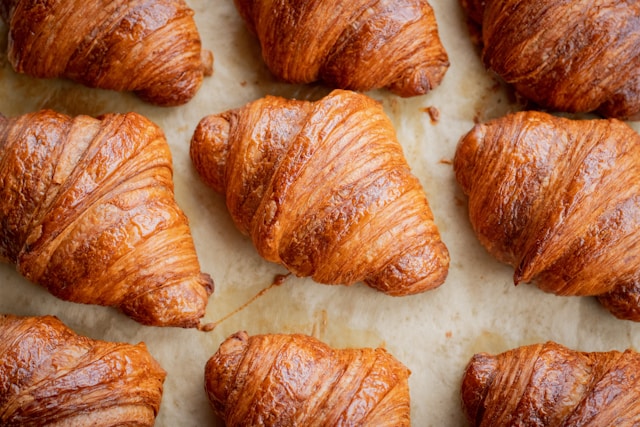
A great croissant should make a sound when you bite it. Not a crunch, exactly—a delicate crackle, followed by buttery layers collapsing into your mouth while approximately 17 crumbs migrate onto your shirt.
The croissant may have French citizenship in the popular imagination, but its flaky passport now has stamps from Melbourne, Tokyo, Copenhagen, Singapore, New York and beyond. The places below were selected for craftsmanship, reputation, distinctive pastry programs and, importantly, the kind of croissant that makes you briefly consider ordering another before finishing the first.
Recent guides still place Paris at the centre of the croissant universe, while international bakeries increasingly put their own spin on lamination, butter, fillings and fermentation.
1. Du Pain et des Idées — Paris, France
History: Founded in 2002 by Christophe Vasseur, Du Pain et des Idées occupies a historic bakery space on Rue Yves Toudic and has become one of Paris’s most celebrated artisan addresses. The bakery emphasizes organic ingredients, long fermentation and handwork.
Address: 34 Rue Yves Toudic, 75010 Paris, France
Crust Breakdown: Deep golden, glassy and dramatically flaky.
Crumb Structure: Open, feather-light honeycomb with substantial lift.
Butter Profile: Rich, cultured and unmistakably dairy-forward.
Signature Variations: Classic croissant au beurre; pain des amis and seasonal viennoiseries.
Cost for Two: €10–16
Instagram: @dupainetdesidees
Website: Du Pain et des Idées
Du Pain et des Idées treats viennoiserie like serious craftsmanship rather than breakfast wallpaper. Its croissant delivers a deeply bronzed exterior, fragile layers and an interior that practically evaporates on the tongue. The historic Paris setting adds atmosphere, while Christophe Vasseur’s insistence on fermentation and handwork gives every bite personality. Arrive early, because flaky perfection rarely enjoys sleeping in either.
2. Maison Kayser — Paris, France
History: Éric Kayser opened the original Maison Kayser at 8 Rue Monge in 1996, building a global bakery group around French breadmaking, natural fermentation and traditional viennoiserie.
Address: 8 Rue Monge, 75005 Paris, France
Crust Breakdown: Thin, crisp and evenly caramelized.
Crumb Structure: Regular, airy lamination with a soft centre.
Butter Profile: Clean, rounded and gently sweet.
Signature Variations: Butter croissant, almond croissant and chocolate-filled viennoiseries.
Cost for Two: €9–15
Instagram: @maison_kayser
Website: Maison Kayser
Maison Kayser is the croissant equivalent of a beautifully tailored French jacket: traditional, polished and difficult to dislike. The butter croissant balances crispness with a tender centre, while the bakery’s broader viennoiserie range keeps things interesting. Its long history, international footprint and technical consistency make it particularly useful for travellers who want classic French baking without gambling their breakfast on mystery pastries.
3. Mamiche — Paris, France
History: Mamiche grew from a neighbourhood bakery concept into one of Paris’s modern pastry favourites. Its bakeries focus on house-made breads, viennoiseries and hand-laminated doughs; the current locations include Rue Condorcet and Rue du Château d’Eau.
Address: 45 Rue Condorcet, 75009 Paris, France
Crust Breakdown: Shatteringly crisp with a caramelized edge.
Crumb Structure: Puffy, irregular and impressively layered.
Butter Profile: Creamy, pronounced and slightly nutty.
Signature Variations: Classic butter croissant and chocolate croissant.
Cost for Two: €10–16
Instagram: @mamicheparis
Website: Mamiche
Mamiche gives Parisian croissants a youthful, neighbourhood-bakery attitude. Its pastries are unapologetically handmade, with visible lamination and a satisfying contrast between brittle crust and soft interior. The chocolate version is particularly tempting for anyone who believes breakfast should occasionally behave like dessert. Expect queues, friendly chaos and the dangerous possibility of leaving with significantly more pastry than planned.
4. Boulangerie Utopie — Paris, France
History: Boulangerie Utopie operates from the 11th arrondissement and has built a reputation for combining traditional baking with playful, contemporary flavours. Its founders emphasize long fermentation and make their own ingredients rather than relying on bought-in products.
Address: 20 Rue Jean-Pierre Timbaud, 75011 Paris, France
Crust Breakdown: Crisp, bronzed and beautifully irregular.
Crumb Structure: Light, layered and slightly chewy.
Butter Profile: Rich but balanced by fermentation.
Signature Variations: Butter croissants plus experimental seasonal viennoiseries.
Cost for Two: €8–14
Instagram: @boulangerieutopie
Website: Boulangerie Utopie
Utopie is where the Parisian croissant loosens its tie and starts experimenting. Alongside classic laminated pastries, the bakery frequently introduces seasonal creations and unexpected flavour combinations. Its croissants retain the essential buttery architecture—crisp outside, airy inside—but the surrounding pastry menu is considerably more adventurous. If traditional French baking feels too predictable, Utopie provides delicious evidence that pastry chefs enjoy mischief too.
5. Poilâne — Paris, France
History: Founded by Pierre Poilâne in 1932, Poilâne remains a family bakery spanning three generations. The original shop at 8 Rue du Cherche-Midi remains central to the brand’s identity, with handmade baking and wood-fired ovens defining its philosophy.
Address: 8 Rue du Cherche-Midi, 75006 Paris, France
Crust Breakdown: Rustic, crisp and deeply browned.
Crumb Structure: More substantial than ultra-light pâtisserie styles.
Butter Profile: Rich but restrained.
Signature Variations: Traditional viennoiseries and almond pastries.
Cost for Two: €10–17
Instagram: @poilane
Website: Poilâne
Poilâne brings history to breakfast without turning the croissant into a museum exhibit. Founded in 1932, this family-run institution is better known for legendary bread, yet its viennoiseries reward curious pastry hunters. Expect a slightly more rustic personality than ultra-delicate pâtisserie croissants. The atmosphere is wonderfully old-world, making breakfast here feel less like eating pastry and more like joining Parisian culinary history.
6. Lune Croissanterie — Melbourne, Australia
History: Founded by former Formula 1 aerodynamicist Kate Reid in 2012, Lune became famous for applying obsessive precision to croissant production. Today it operates multiple locations across Australia.
Address: 119 Rose Street, Fitzroy, VIC 3065, Australia
Crust Breakdown: Highly structured, golden and audibly crisp.
Crumb Structure: Geometric, open and remarkably consistent.
Butter Profile: Deep, creamy and elegant.
Signature Variations: Almond croissant, kouign-amann and seasonal creations.
Cost for Two: A$20–32
Instagram: @lunecroissanterie
Website: Lune Croissanterie
Lune approaches croissant-making with the seriousness of a space mission and the deliciousness of a bakery. Kate Reid’s aerodynamic background famously informs the brand’s precision, producing beautifully engineered layers and exceptional consistency. The croissants are crisp, buttery and structured without feeling heavy. Melbourne’s pastry scene would be considerably less exciting without Lune, where breakfast occasionally resembles delicious edible engineering.
7. Tartine Bakery — San Francisco, USA
History: Tartine began in 2002 and became one of San Francisco’s defining artisan bakeries. Its Guerrero Street bakery remains a destination for naturally fermented breads, morning buns and famously flaky pastries.
Address: 600 Guerrero Street, San Francisco, CA 94110, USA
Crust Breakdown: Golden, crackly and caramelized.
Crumb Structure: Open, tender and slightly chewy.
Butter Profile: Full-bodied and creamy.
Signature Variations: Classic croissant, morning bun and seasonal pastries.
Cost for Two: $18–28
Instagram: @tartinebakery
Website: Tartine Bakery
Tartine’s croissant belongs to San Francisco’s great bakery tradition: serious fermentation, excellent ingredients and enough butter to make your cardiologist suddenly interested in your travel itinerary. The exterior offers crisp caramelized flakes while the interior remains soft and open. Pair it with coffee, watch the neighbourhood wake up and accept that your carefully planned sightseeing schedule has just been delayed by pastry.
8. b. Patisserie — San Francisco, USA
History: Founded by pastry chef Belinda Leong and Michel Suas, b. Patisserie grew from Leong’s European pastry experience and San Francisco pop-ups into a permanent bakery. The California Street location became its home for modern French-style pastry.
Address: 2821 California Street, San Francisco, CA 94115, USA
Crust Breakdown: Crisp, deeply laminated and glossy.
Crumb Structure: Delicate, open and buttery.
Butter Profile: Luxurious with a rounded finish.
Signature Variations: Classic croissant, kouign-amann and seasonal laminated pastries.
Cost for Two: $18–30
Instagram: @bpatisserie
Website: b. Patisserie
b. Patisserie brings polished French technique to San Francisco with just enough Californian personality to keep things interesting. Its viennoiseries are precise, buttery and beautifully laminated, while the pastry counter offers plenty of reasons to abandon moderation. The croissant is particularly satisfying when paired with coffee, although the kouign-amann lurks nearby like a deliciously caramelized test of personal discipline.
9. Dominique Ansel Bakery — New York, USA
History: Chef Dominique Ansel opened his Soho bakery in November 2011. It later became globally famous for inventions including the Cronut, while continuing to serve classic French viennoiserie.
Address: 189 Spring Street, New York, NY 10012, USA
Crust Breakdown: Crisp, caramelized and pastry-shop polished.
Crumb Structure: Airy and layered with a tender centre.
Butter Profile: Rich, clean and pronounced.
Signature Variations: Croissant, DKA, Cronut and rotating seasonal creations.
Cost for Two: $20–35
Instagram: @dominiqueansel
Website: Dominique Ansel Bakery
Dominique Ansel Bakery is for people who believe a croissant should be traditional only until someone has a better idea. The bakery’s classic viennoiserie is technically polished, but Ansel’s real superpower is invention. After tasting the croissant, consider exploring the DKA or Cronut. Just remember: ordering one pastry here is optimism; ordering three is realistic trip planning.
10. Pophams Bakery — London, England
History: Pophams was founded in 2017 and built its identity around innovative viennoiserie, seasonal flavours and community-focused bakery spaces. Its original London Fields operation helped establish the brand’s reputation for imaginative laminated pastries.
Address: 197–205 Richmond Road, London E8 3NJ, UK
Crust Breakdown: Thin, crisp and caramelized.
Crumb Structure: Light, airy and boldly laminated.
Butter Profile: Creamy with a subtle sweetness.
Signature Variations: Seasonal filled croissants and savoury viennoiserie.
Cost for Two: £12–20
Instagram: @pophamsbakery
Website: Pophams Bakery
Pophams treats laminated pastry as an open invitation to experiment. Its croissants can be classical one morning and wildly inventive the next, depending on seasonal fillings and the bakery team’s current mood. The layers remain technically sharp beneath all that creativity. For London visitors bored by predictable breakfast pastries, Pophams provides an excellent excuse to chase crumbs across the city.
11. HART Bageri — Copenhagen, Denmark
History: HART Bageri was founded in 2018 through a partnership involving baker Richard Hart, René Redzepi and partners associated with noma. Its philosophy combines sourdough expertise, traditional craft and modern creativity.
Address: Refshalevej 159A, 1432 Copenhagen, Denmark
Crust Breakdown: Darkly caramelized, crisp and ultra-fragile.
Crumb Structure: Airy with irregular fermentation pockets.
Butter Profile: Rich, cultured and slightly tangy.
Signature Variations: Butter croissant, almond variations and seasonal pastries.
Cost for Two: DKK 100–160
Instagram: @hartbageri
Website: HART Bageri
HART Bageri gives Copenhagen a croissant with serious bread-world credentials. Sourdough thinking influences the bakery’s approach, producing pastries with deep flavour, crisp lamination and a gently fermented character. It is modern Scandinavian baking without unnecessary theatrics: excellent flour, excellent butter and careful technique. Basically, the pastry equivalent of a minimalist Danish chair—beautiful, functional and surprisingly expensive.
12. Fabrique — Stockholm, Sweden
History: Fabrique was founded in Stockholm in 2008 by David and Charlotta Zetterström as an artisanal stone-oven bakery. The company has since expanded internationally while retaining its Scandinavian baking identity.
Address: Rosenlundsgatan 28, 118 53 Stockholm, Sweden
Crust Breakdown: Crisp, rustic and deeply browned.
Crumb Structure: Soft, airy and slightly chewy.
Butter Profile: Mild, creamy and balanced.
Signature Variations: Butter croissant and Scandinavian-inspired pastries.
Cost for Two: SEK 100–170
Instagram: @fabrique_stenugnsbageri
Website: Fabrique Bakery
Fabrique proves Scandinavia can flirt successfully with French viennoiserie. Its stone-oven bakery philosophy gives the croissant a rustic edge: crisp outside, soft inside and distinctly aromatic. The pastry works beautifully with Swedish coffee culture, especially during a leisurely fika. Come for the croissant, stay for the cinnamon bun, and leave wondering why your suitcase suddenly contains seventeen baked goods.
13. Hof Kelsten — Montreal, Canada
History: Hof Kelsten is a Jewish-inspired artisan bakery in Montreal’s Mile End, founded by baker Christophe Loiseau. Its Saint-Laurent location is particularly known for breads, babka, rugelach and a highly regarded croissant.
Address: 4524 Saint-Laurent Boulevard, Montreal, QC H2T 1R4, Canada
Crust Breakdown: Crisp, flaky and beautifully browned.
Crumb Structure: Open, delicate and slightly chewy.
Butter Profile: Rich with a subtle savoury edge.
Signature Variations: Butter croissant, chocolate pastries and Jewish-inspired viennoiserie.
Cost for Two: C$16–26
Instagram: @hofkelsten
Website: Hof Kelsten
Hof Kelsten takes Montreal’s multicultural food identity and folds it neatly into French technique. Its croissant has the expected crisp, flaky edges but sits comfortably beside babka, rugelach and Jewish baking traditions. The result feels distinctive rather than gimmicky. Visit Mile End hungry, because choosing between croissants, chocolate babka and rye bread is precisely the kind of difficult decision travellers deserve.
14. Jason Bakery — Cape Town, South Africa
History: Jason Bakery became one of Cape Town’s best-known artisan bakeries under baker Jason Lilley, developing a reputation for breads, pastries and creative breakfast baking.
Address: 185 Bree Street, Cape Town, South Africa
Crust Breakdown: Golden, crisp and satisfyingly crunchy.
Crumb Structure: Light and layered with a tender core.
Butter Profile: Creamy and pronounced.
Signature Variations: Classic croissants and seasonal filled viennoiseries.
Cost for Two: R180–280
Instagram: @jasonbakery
Website: Jason Bakery
Cape Town’s Jason Bakery demonstrates that excellent croissants do not require a French postcode. The bakery’s approach combines artisan breadmaking with a playful contemporary sensibility, resulting in pastries that are crisp, buttery and substantial without becoming greasy. Bree Street supplies the urban backdrop, while the croissant supplies the important part: enough flaky evidence on your clothes to prove breakfast was worth it.
15. Tiong Bahru Bakery — Singapore
History: Tiong Bahru Bakery opened its first store at 56 Eng Hoon Street in 2012, establishing itself as a neighbourhood bakery before expanding across Singapore. The brand describes its handmade croissant as one of its defining products.
Address: 56 Eng Hoon Street, Singapore 160056
Crust Breakdown: Golden, crisp and delicately brittle.
Crumb Structure: Airy, soft and well-layered.
Butter Profile: Rich with a clean finish.
Signature Variations: Plain, almond, chocolate and savoury croissants.
Cost for Two: S$16–26
Instagram: @tiongbahrubakery
Website: Tiong Bahru Bakery
Tiong Bahru Bakery brings French pastry technique into one of Singapore’s most characterful neighbourhoods. Its handmade croissants are crisp, buttery and satisfyingly airy, while variations such as almond and savoury fillings add local personality. The bakery’s relaxed atmosphere makes it ideal for a slow breakfast, although the aroma of fresh viennoiserie may cause your carefully scheduled Singapore itinerary to collapse immediately.
16. Baker & Cook — Singapore
History: Baker & Cook was founded in 2012 and grew from its original Hillcrest Road bakery into a Singapore artisan bakery group. Founder Dean Brettschneider built the brand around handcrafted breads and pastries.
Address: 77 Hillcrest Road, Singapore 288951
Crust Breakdown: Thin, flaky and golden.
Crumb Structure: Soft, airy and delicately layered.
Butter Profile: Rich, creamy and slightly sweet.
Signature Variations: Butter croissant, almond croissant and filled seasonal versions.
Cost for Two: S$15–25
Instagram: @bakerandcooksg
Website: Baker & Cook
Baker & Cook keeps things approachable while taking its baking seriously. The croissant is classically flaky and buttery, with a soft centre that pairs particularly well with strong coffee. Its broader pastry menu makes the bakery a useful breakfast headquarters for groups with different cravings. One person can order a croissant, another something sweet, and nobody has to admit they chose poorly.
17. LE SUCRÉ-COEUR — Osaka, Japan
History: LE SUCRÉ-COEUR is an acclaimed Osaka bakery founded by baker Ayumu Iwanaga. Its former Kitashinchi location opened in 2016 and closed in March 2026; the bakery continues at its Kishibe and Yotsubashi locations.
Address: 5-20-3 Kishibekita, Suita, Osaka, Japan
Crust Breakdown: Deeply browned and audibly crisp.
Crumb Structure: Fine, layered and delicately elastic.
Butter Profile: Rich with refined sweetness.
Signature Variations: Classic croissant and French-inspired seasonal pastries.
Cost for Two: ¥1,600–2,800
Instagram: @lesucrecoeur
Website: LE SUCRÉ-COEUR
LE SUCRÉ-COEUR is Osaka’s answer to anyone who thinks Japanese precision and French pastry make an unfairly powerful combination. Its croissants are meticulously laminated, deeply aromatic and elegant without becoming fussy. The bakery’s French influence is obvious, but the Japanese attention to detail gives everything an unusually refined finish. Come hungry, leave impressed, and pronounce the name confidently—or at least try.
18. Pâtisserie Sadaharu Aoki Paris — Tokyo/Paris
History: Sadaharu Aoki built his pastry identity between Japan and France, developing a distinctive Parisian-Japanese style. The company’s current Japanese operation lists Tokyo boutiques including Marunouchi and Tokyo Midtown.
Address: Shin-Kokusai Building 1F, 3-4-1 Marunouchi, Chiyoda-ku, Tokyo, Japan
Crust Breakdown: Delicate, polished and crisp.
Crumb Structure: Fine, airy and meticulously laminated.
Butter Profile: Elegant, creamy and restrained.
Signature Variations: Classic croissants alongside matcha and Japanese-inspired pastries.
Cost for Two: ¥2,000–3,500
Instagram: @sadaharuaoki
Website: Sadaharu Aoki Paris
Sadaharu Aoki’s pastry world lives comfortably between Parisian technique and Japanese precision. The croissant is refined rather than aggressively rustic, with delicate lamination and a clean buttery finish. The real attraction, however, is the broader pastry collection, where flavours such as matcha and Japanese tea meet French methods. It is elegant, restrained and dangerously easy to underestimate before the first bite.
19. VIRON — Tokyo, Japan
History: VIRON’s Shibuya bakery opened in June 2003, bringing a strongly French-inspired bread and pastry program to Tokyo. Its Shibuya branch sits opposite the former Tokyu department-store area.
Address: 33-8 Udagawacho, Shibuya-ku, Tokyo, Japan
Crust Breakdown: Crisp, golden and sharply laminated.
Crumb Structure: Airy with a tender, slightly chewy centre.
Butter Profile: Full, aromatic and distinctly French.
Signature Variations: Classic croissant and French-style viennoiseries.
Cost for Two: ¥1,800–3,000
Instagram: @viron_shibuya
VIRON feels like someone packed a French boulangerie into Tokyo and somehow improved the commute. The Shibuya bakery is celebrated for French bread and pastry technique, with croissants offering crisp layers, aromatic butter and a soft centre. It is an excellent stop for travellers who want unmistakably French viennoiserie without leaving Japan. Tokyo precision meets Parisian indulgence, and everyone wins.
20. JUNO the Bakery — Copenhagen, Denmark
History: JUNO was born in Copenhagen’s Østerbro neighbourhood in 2017, founded by Nina Schmiegelow and Emil Glaser. The bakery became famous for its cardamom buns but also produces highly regarded pistachio croissants and other pastries.
Address: Århusgade 48, 2100 Copenhagen Ø, Denmark
Crust Breakdown: Crisp, delicate and beautifully browned.
Crumb Structure: Soft, airy and generously layered.
Butter Profile: Creamy with a subtle cultured note.
Signature Variations: Pistachio croissant, classic croissant and seasonal pastries.
Cost for Two: DKK 100–170
Instagram: @junothebakery
Website: JUNO the Bakery
JUNO may be famous for cardamom buns, but ignoring its croissants would be a serious breakfast crime. The bakery’s pastry program focuses on carefully sourced ingredients, artisanal production and freshness throughout the day. The pistachio croissant is particularly memorable, combining buttery lamination with nutty richness. Copenhagen visitors should arrive early, because excellent pastry and sleeping late rarely coexist peacefully.
The Global Croissant Verdict
The best croissant in the world is ultimately a dangerous question because pastry preference is intensely personal. Some people want a feather-light Parisian classic; others want sourdough depth, pistachio filling, almond cream or a wildly experimental creation.
But one thing is non-negotiable: lamination matters.
The ideal croissant should have a crisp, golden exterior, clearly defined layers, an airy but structured crumb and enough butter to announce its presence without turning breakfast into an oil spill. Modern croissant culture is also expanding far beyond France, with bakeries around the world adapting French technique to local ingredients and contemporary pastry culture.